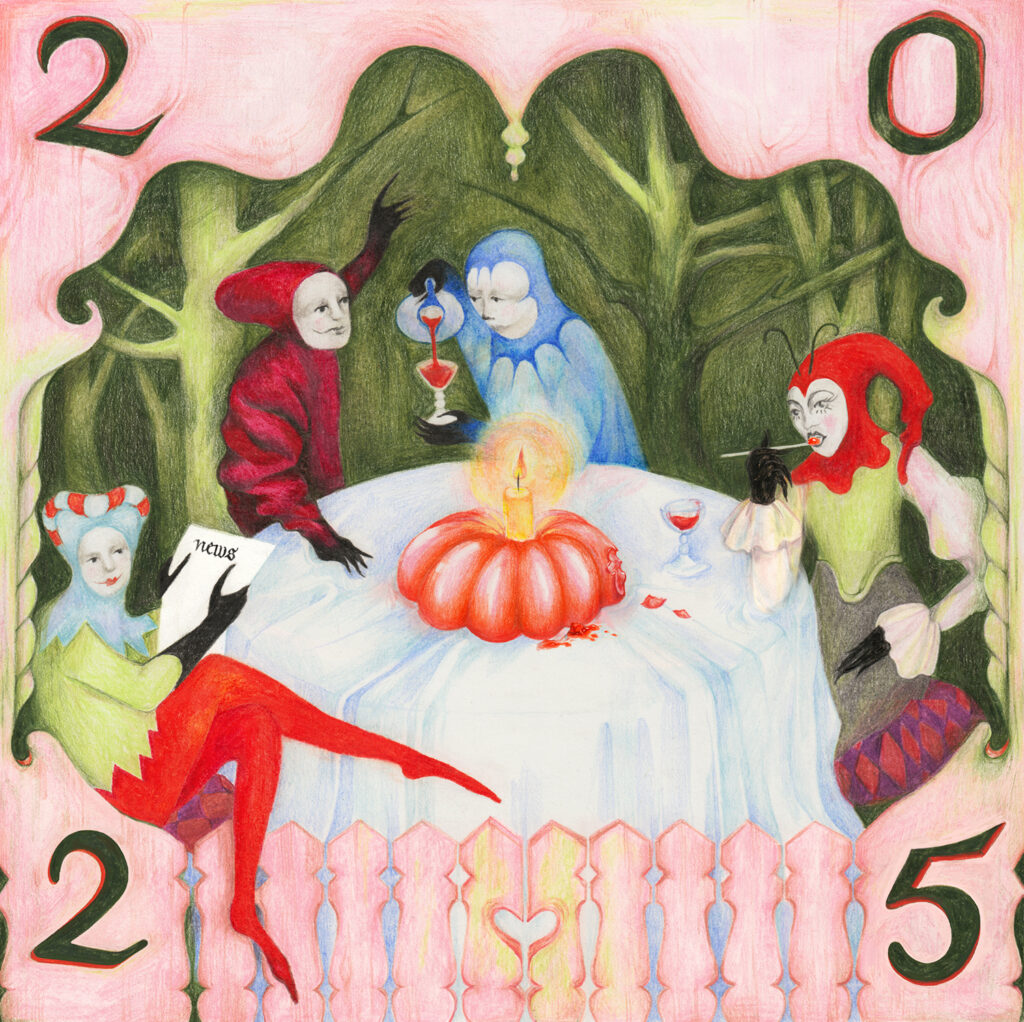
A bird’s-eye view of 2025 at the Estonian Centre for Contemporary Art (CCA)
- In collaboration with Kaamos Group, the CCA launched the country’s largest art grant, with Anna Mari Liivrand named as the inaugural recipient of the Kaamos Grant.
- In the interim year between organising the Estonian Pavilions at the Venice Biennale, preparations were underway for the 61st Venice Biennale with artist Merike Estna, alongside follow-up projects for the previous pavilion artist, Edith Karlson.
- Two issues of the international art magazine A Shade Colder were published and presented at launch events in Tallinn, Riga, and Oslo.
- As part of the international network Borderland Poetics: Rewilding Tongues, we organised research trips to Tallinn and Reykjavík, complemented by an internship programme.
- The CCA Archive was featured in an exhibition at the Library of the Estonian Academy of Arts, at a summer school in Latvia, and at the New Horizons International Film Festival in Poland.
- We hosted 39 international curators, artists, and critics, who held meetings with at least 66 Estonian artists and curators.
- Preparations and public consultation rounds for the new strategic development plan for the art sector were launched, and the 2024 exhibition statistics were finalised.
What’s in store for 2026?
- On 6 May, the Estonian pavilion will open at the 61st Venice Biennale with Merike Estna’s solo exhibition The House of Leaking Sky (curated by Natalia Sielewicz), located in the immediate vicinity of the Giardini. In collaboration with the newly established Upe Foundation, a joint celebration for the Baltic pavilions will also be held in Venice.
- Edith Karlson will open solo exhibitions at the Kiasma Museum of Contemporary Art in Helsinki and the Douglas Hyde Gallery in Dublin, both stemming from her exhibition Hora lupi at the Estonian pavilion during the 60th Venice Biennale.
- In collaboration with the Tallinn Art Hall, we have launched an international PR initiative to promote Estonian art, led by the highly experienced communications agency Sutton.
- We will continue to award the Kaamos Grant.
- The CCA continues its long-standing work with a strategic focus on Eastern Europe and the Nordic region.
- A new print issue of A Shade Colder will be released for the 61st Venice biennale and will be presented in Helsinki and Reykjavík, among other locations.
- In collaboration with other art institutions and the wider art community, the strategic development plan for Estonian art 2026–2030 will be finalised.
- Following the completion of the Tallinn Art Hall renovations, the CCA office will return to its historical location.
Read more about the CCA’s 2025 projects and future directions here:
The Kaamos Grant
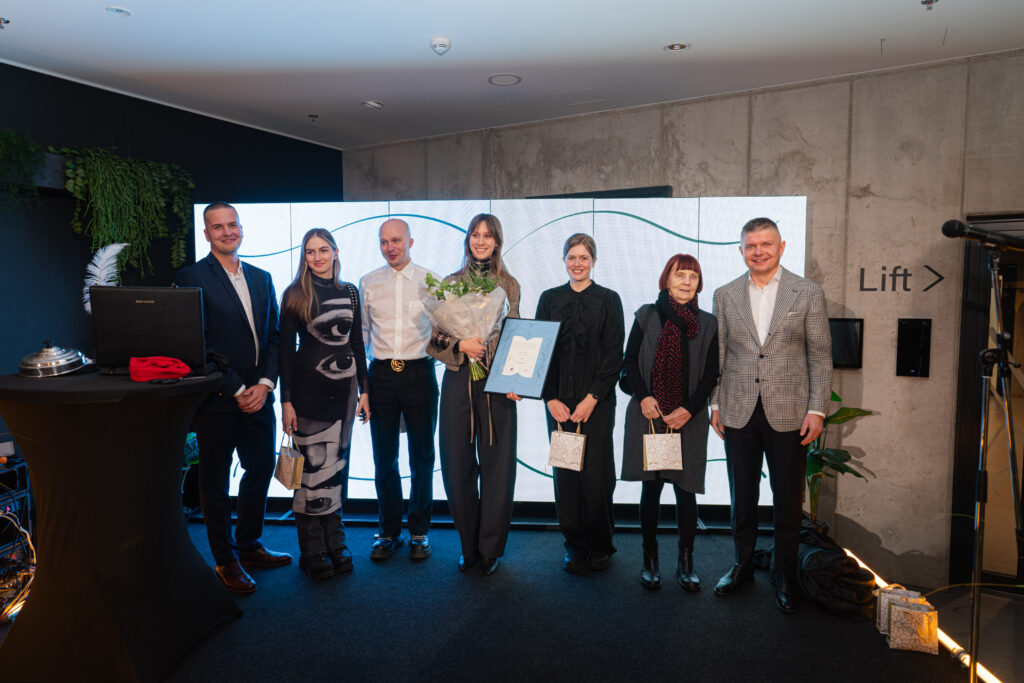
Anna Mari Liivrand has been named the inaugural recipient of the 25,000-euro Kaamos Grant. Established in collaboration between Kaamos Group and the CCA, the grant aims to provide momentum to the work of Estonian female artists and create new opportunities within the local art scene. The selection committee included Eha Komissarov, Peeter Talvistu, Sten Ojavee, Darja Popolitova, Jürgen Mikk Jõeleht, and Marek Pohla. The grant’s visual identity was designed by Brit Pavelson. The inaugural award was presented at a festive ceremony hosted by Netti Nüganen and Irene Kivaste. The grant programme is set to continue in 2026.
Estonian Pavilion at the Venice Biennale
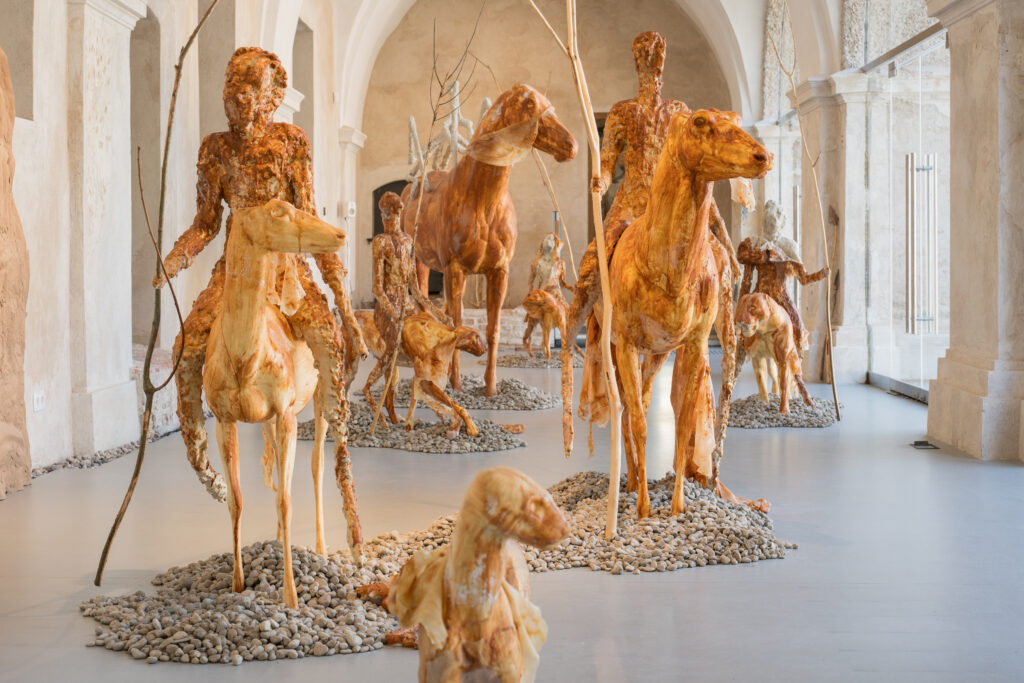
This year, efforts focused on preparations for the Estonian Pavilion at the 61st Venice Biennale, where Estonia will be represented by artist Merike Estna. Developed in collaboration with curator Natalia Sielewicz, the project is titled The House of Leaking Sky. In this exhibition, the space transforms into the artist’s open studio, allowing visitors to witness the creation of paintings throughout the Biennale. Through an open call, Paula Buškevica and Louise Borinski were selected as the exhibition designers. In October, Merike Estna presented her exhibition Ocean at the Tartu Art House, marking her final major project before Venice. The Estonian Pavilion will open on 6 May 2026, in a community centre managed by Patronato Salesiano Leone XIII, located in the immediate vicinity of the Giardini.
Parallel to the preparations for the new pavilion, works created by Edith Karlson for the previous Estonian Pavilion exhibition Hora lupi were included in Spiegel im Spiegel, a major collaborative project between the Art Museum of Estonia and the Dresden State Art Collections. Additionally, Karlson held a solo exhibition titled March! at the Sapieha Palace in Vilnius. Looking ahead to 2026, she will open solo exhibitions at Kiasma in Helsinki and the Douglas Hyde Gallery in Dublin.
International art magazine A Shade Colder
This year saw the publication of two issues of A Shade Colder: the print issue Uncertain Territories and the online issue Practices in Dialogue. Throughout the year, the magazine featured contributions from a diverse range of voices, including Maria Kapajeva, Katrin Kivimaa, Sten Ojavee, Jaan Toomik, Kai Kaljo, Anu Juurak, Bohdan Bunchak, Cathrin Mayer, Johanna Rannula, Olga Tjurina, Olivia Soans, Maria Metsalu, Mariam Elnozahy, Margit Säde, Jaakko Pallasvuo, Krista Kodres, Elīna Ķempele, Rebeka Põldsam, Kaarin Kivirähk, Vanina Saracino, Kathrin Heinrich, and Kiwa. The magazine also highlighted the work of artists such as Terje Ojaver, Flo Kasearu, Maria Kapajeva, Kaarel Kurismaa, Netti Nüganen, Anna-Stina Treumund, and Kristina Õllek, among others.
Discussions within the magazine explored the “new wave” in Estonian fashion design, the legacy of Soros Centers for Contemporary Arts on 1990s artistic innovation, the daily life of the Narva Art Residency, and the current state of curating in the Nordic-Baltic region. Each issue of A Shade Colder included a cultural guide to the art scenes of Estonia and its neighbouring countries. This year, magazine launches were hosted at the Fair Enough Art Book Fair in Tallinn, the Kim? Contemporary Art Centre’s anniversary in Riga, and the Arts and Culture Magazine Publishers Forum in Oslo. The next issue will be released for the 61st Venice Biennale, with launches planned for Helsinki and Reykjavík. We also continue to donate 50% of the proceeds from every magazine sold to the Ukrainian Emergency Art Fund.
International Guests and Networks
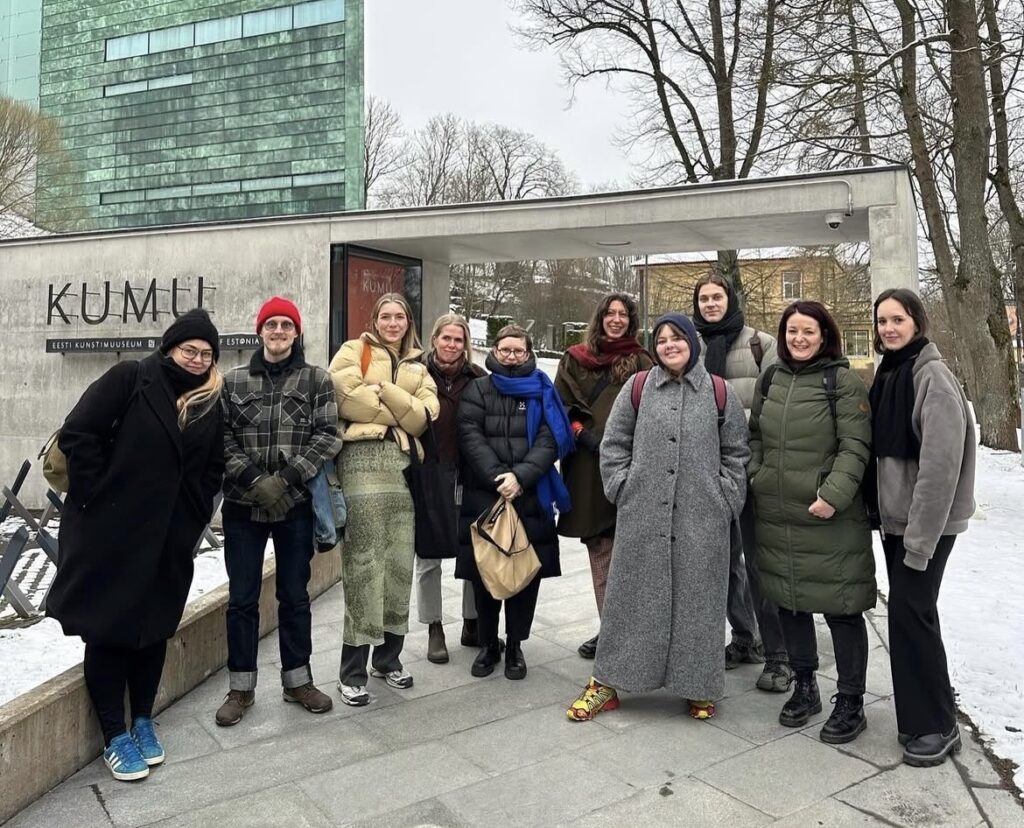
In 2025, the CCA curated professional visit programs and provided expert consultations on the Estonian art scene for 39 international curators, critics, and artists. These initiatives facilitated meetings with at least 66 Estonian art professionals. As part of the Borderland Poetics: Rewilding Tongues network, a delegation of curators and critics from Iceland, Finland, and Wales visited Tallinn, complemented by a research trip to Reykjavík. Furthermore, the network enabled two emerging art professionals to participate in a paid internship programme: Rosa-Maria Nuutinen at the Tallinn Illustration Triennial and Marju Tajur at the Sequences Biennial in Iceland.
Throughout the year, several writers about art visited Estonia, resulting in coverage in prominent international publications such as Berlin Art Link, Frieze, Art Monthly, and The Observer. A Shade Colder remains an active member of the Arts and Culture Magazine Publishers Forum, a network connecting Baltic and Nordic art magazines. This network awards an annual critic’s grant, which was received this year by Andria Nyberg Forshage. In collaboration with the Institute of Art History and Visual Culture at the Estonian Academy of Arts, we organised a lecture by the renowned art critic Orit Gat at the beginning of the year. Additionally, the CCA serves as a long-term partner of the art centre Publics for a multi-year series of conferences. The inaugural event, titled Positioning: A Symposium on Curatorial Thinking in the Nordic-Baltic Region & Beyond, took place in Helsinki in October, where Sten Ojavee represented the CCA as a speaker.
Activities of the CCA Archive
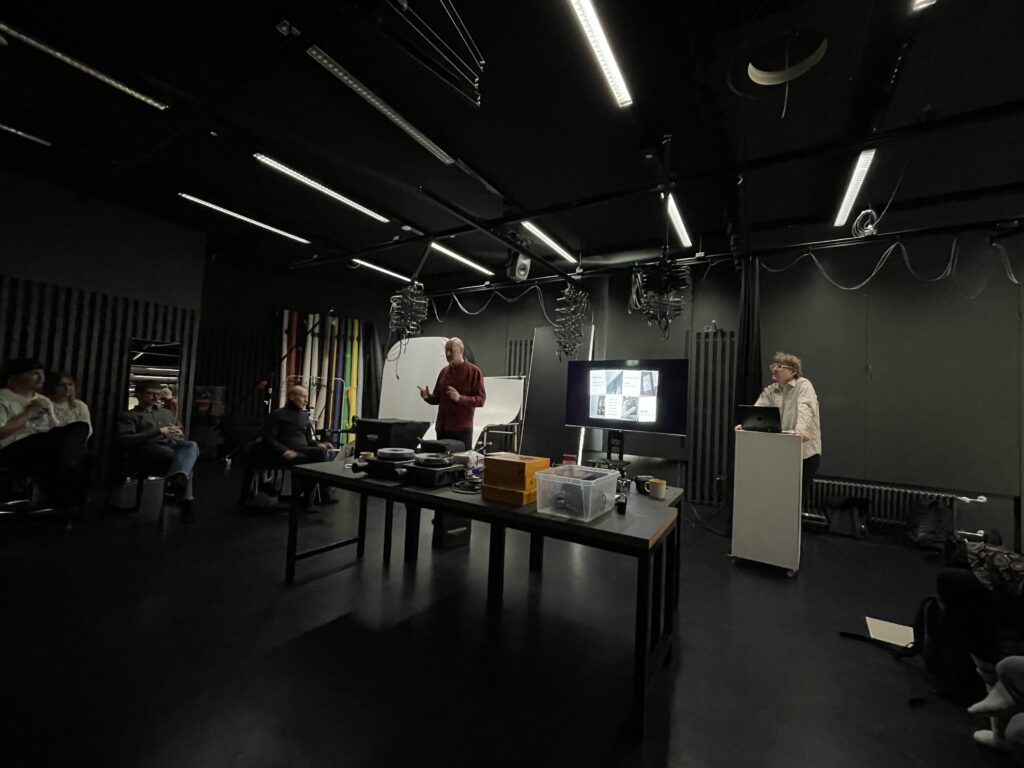
In March, the exhibition Measured Views: Details from the CCA Archive by artist and graphic designer Andrew Hill (curated by Marika Agu) opened at the Library of the Estonian Academy of Arts. The exhibition followed a two-month preparation process driven by spontaneous selection, during which Hill arranged archival excerpts into multi-scale compositions. Institutional outreach continued as Marika Agu and Sten Ojavee delivered presentations at a summer school in Alūksne, organised by the Latvian Centre for Contemporary Art. Furthermore, the 25th New Horizons International Film Festival in Wrocław, Poland, featured the video programme Club Classics, curated specifically from the CCA video archive. The programme showcased works by a prominent group of artists, including Kadriann Kibus, Liina Paakspuu, Mark Raidpere, Laura Nestor, Ulvi Tiit, Tarvo Varres, Killu Sukmit, Mari Laanemets, Mare Tralla, Kiwa, and Ene-Liis Semper.
The archive addressed 54 inquiries from Estonian and international art historians, curators, and students throughout the year. New additions to the database of Estonian artists on the CCA website included Hanna Samoson and John Grzinich, with several further artist profiles currently in development for 2026. The partnership with the Library of the Estonian Academy of Arts will also extend into the coming year; in January, the solo exhibition Small Gouaches and Other Graphic Works by animator Francesco Rosso (curated by Marika Agu) is set to open. Additionally, the academic journal Proceedings of the National Library of Latvia will publish Marika Agu’s article, Archive of the Estonian Centre for Contemporary Art as a Multimodal Agent, in February.
Development Plan and Statistics
This year marked the conclusion of the 2021–2025 Art Sector Development Plan (KUVA). Its successor, KUVA II, addresses unresolved development needs from the initial cycle while incorporating new challenges arising from a rapidly changing global landscape. The development plan serves as a vital tool, enabling the sector to articulate not only its long-term visions but also a concrete action plan for implementation. Furthermore, it functions as a strategic document to effectively communicate the sector’s requirements to key partners and policymakers.
The drafting process is led by the Estonian Artists’ Association, the Center for Contemporary Art, Estonia (CCA), the Estonian Contemporary Art Development Center (ECADC), and the Estonian Union of Art Institutions, with the wider art community invited to participate through workshops and discussions. Five themed sessions were conducted via Zoom this year, and the new Strategic Development Plan for 2026–2030 will be finalised next year. Additionally, the CCA has compiled the 2024 Estonian art field statistics, aggregating comprehensive data from 99 exhibition venues across the country.
Exhibition Projects
Marika Agu curated the 19th Tallinn Print Triennial, an international group exhibition hosted at the Tallinn Art Hall’s Lasnamäe Pavilion and the Lindakivi Cultural Centre. Maria Arusoo curated two significant solo exhibitions: Edith Karlson’s March! at the Sapieha Palace in Vilnius and Merike Estna’s Ocean at the Tartu Art House.
Curatorial projects also included Sten Ojavee’s curation of Ron Verlin’s exhibition, that which I was in life, I am in death, at the Draakon Gallery, while Mikk Lahesalu co-curated Karl Joonas Alamaa’s exhibition Daily Play and Bread at the EKA Gallery. Furthermore, the CCA facilitated the international presence of Estonian art by supporting the inclusion of Aili Vint’s work in the 36th Ljubljana Biennale, titled Oracle.